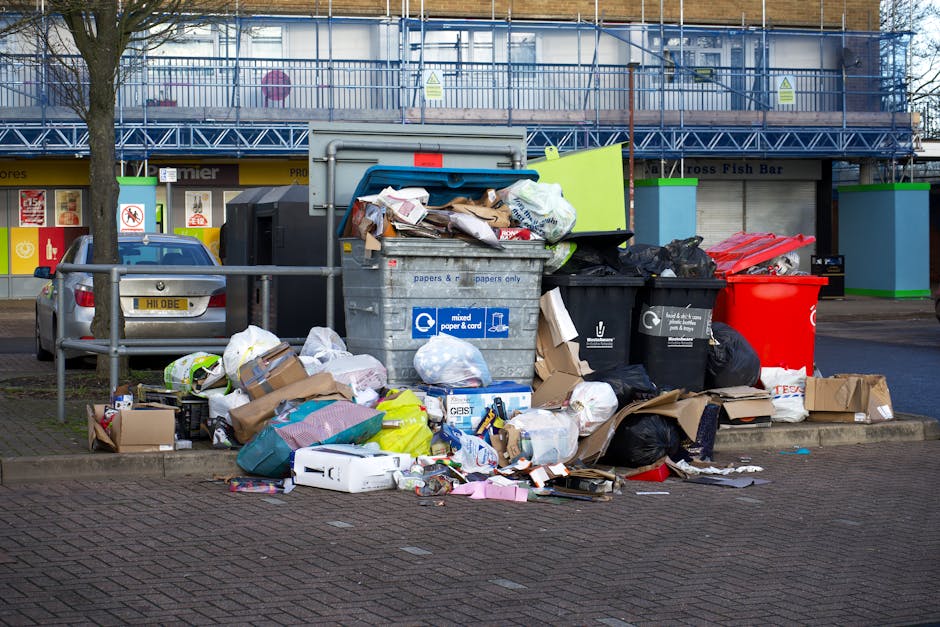
Avoid hidden rubbish removal charges in Wandsworth
If you have ever asked for a rubbish removal quote and then watched the price climb at the doorstep, you will know the frustration. It is never just about the money. It is the feeling of being caught out, usually when the bags are already outside and the van is waiting. This guide is here to help you avoid hidden rubbish removal charges in Wandsworth with practical checks, realistic examples, and a clear way to compare quotes before you book.
Whether you are clearing a flat near the river, getting rid of builders' waste after a small refurbishment, or just trying to shift a garden pile that has somehow grown over the weekend, the basics are the same: know what you are paying for, ask the right questions, and make sure the quote matches the real job. Simple enough in theory. In practice, not always.
To make things easier, this article breaks the process down step by step. You will see where extra charges tend to appear, how a genuine quote is usually structured, and what to check before anyone starts loading. There is also a practical checklist, a comparison table, and answers to the questions people in Wandsworth ask most often.
Table of Contents
- Why Avoid hidden rubbish removal charges in Wandsworth Matters
- How Avoid hidden rubbish removal charges in Wandsworth Works
- Key Benefits and Practical Advantages
- Who This Is For and When It Makes Sense
- Step-by-Step Guidance
- Expert Tips for Better Results
- Common Mistakes to Avoid
- Tools, Resources and Recommendations
- Law, Compliance, Standards, or Best Practice
- Options, Methods, or Comparison Table
- Case Study or Real-World Example
- Practical Checklist
- Conclusion
- Frequently Asked Questions
Why Avoid hidden rubbish removal charges in Wandsworth Matters
Hidden charges are not just an irritation. They can turn a straightforward clear-out into an awkward, expensive mess. In a busy part of London like Wandsworth, where parking, access, and collection timing can already be tight, a vague quote can become a moving target very quickly. That matters whether you are a homeowner, tenant, landlord, or tradesperson trying to keep a project moving.
The main problem is that some quotes look low at first glance, then start adding on extras for things like labour, loading time, stair carries, congestion, difficult access, heavy materials, or disposal fees. Sometimes those extras are fair. Sometimes they are not explained well enough. The difference usually comes down to clarity.
And clarity matters because rubbish removal is one of those services people often book in a hurry. The spare room needs clearing before guests arrive. The kitchen is full of old units. The garden waste is starting to smell a bit in the sun. You want it gone now, not after three phone calls and a mild headache. Hidden fees exploit that urgency.
There is also a trust issue. A company that is upfront about pricing usually tends to be upfront about the service as well. That does not guarantee perfection, of course, but it is a better starting point than a quote that sounds suspiciously cheap. To be fair, if a price seems too good to be true, it often is.
If you are comparing local options, it can help to look at broader service pages too, such as the Wandsworth rubbish clearance service area, the main rubbish removal service, or the focused house clearance service if you are clearing a property rather than a single load.
How Avoid hidden rubbish removal charges in Wandsworth Works
The safest way to avoid surprise costs is to treat the quote process like a mini audit. A proper rubbish removal quote should be based on what is actually being collected, how much space it takes in the van, how easy it is to remove, and where it needs to go. If any of those points are unclear, the final bill can drift.
In practical terms, a good provider will normally want details such as:
- the type of waste, for example mixed household rubbish, garden waste, furniture, or building debris
- the approximate volume or number of items
- access details, like stairs, basement storage, or narrow hallways
- parking conditions outside the property
- whether loading will be by the team, by you, or both
- any bulky, fragile, or particularly heavy items
That is the ideal. In real life, people often send one blurry photo and hope for the best. It happens. But the more complete the information, the less room there is for pricing surprises later.
Here is the key point: hidden charges usually appear when a quote is made before the job has been properly understood. If you are asked for photos, measurements, or a description of access, that is usually a sign the company is trying to price responsibly rather than guessing. The reverse can also be true, sadly. A very quick quote with no questions can be a red flag.
Some providers offer services that are priced by load size, some by item count, and some by time or labour plus disposal. None of these models is automatically better. What matters is whether the model is explained clearly. If you know exactly how the price is calculated, you can compare like with like.
For larger or more complex jobs, related support pages such as the builders waste clearance service and the garden waste removal service may also help you understand what should be included in a quote.
Key Benefits and Practical Advantages
The obvious benefit is saving money, but there is more to it than that. A clear, honest quote gives you control. You can decide whether to go ahead, change the scope, or separate the job into stages. That kind of flexibility is especially useful in London, where plans change fast and space is often limited.
Here are the main advantages of taking time to avoid hidden rubbish removal charges:
- Better budgeting: you know the real cost before the van turns up.
- Less stress: no awkward conversation at the kerbside about "unexpected extras".
- Faster decisions: clear pricing makes it easier to compare providers.
- Fewer disputes: less chance of disagreement over what was included.
- Better service fit: you can choose the right company for your waste type and access conditions.
There is also a practical benefit that people sometimes miss. If you know what is included, you can prepare the site properly. That might mean moving items to the ground floor, separating recyclable materials, or checking parking options before collection day. Small prep steps like that can reduce labour time and help the job run smoothly. Not glamorous, but effective.
Expert takeaway: the cheapest quote is not the safest quote. The best quote is the one that explains exactly what you are paying for, what could change the price, and what the final collection will involve.
If your priority is a broader property clear-out, it may also be worth exploring specialist services such as loft clearance or office clearance, where pricing and access issues can differ from a standard one-off collection.
Who This Is For and When It Makes Sense
This approach is useful for almost anyone booking waste collection in Wandsworth, but it is especially relevant if your job has a few moving parts. For example, if you have mixed waste, a top-floor flat, a shared driveway, or a pile of bulky items that look bigger in the hallway than they did in the room, you will want pricing clarity before collection day.
It makes sense for:
- homeowners clearing lofts, garages, sheds, or gardens
- tenants moving out and trying to avoid last-minute charges
- landlords dealing with end-of-tenancy waste or abandoned items
- builders and tradespeople with small to medium site waste
- small businesses clearing stockrooms, offices, or refurb debris
A quick example. Imagine you are clearing an old wardrobe, a broken sofa, and four black bags from a first-floor flat near a busy road. The waste itself is not unusual, but stairs, parking, and lifting are all part of the job. If the provider did not ask about access, they may add on fees later. If they did ask, you already know you are dealing with someone who understands the real shape of the work.
Truth be told, this is where many bad experiences start: not with a scam, but with a rushed conversation. The customer assumes the provider understands the job. The provider assumes the customer knows what matters. Nobody asks the awkward question. Then everyone is surprised. Better to ask the awkward question early.
Step-by-Step Guidance
If you want to avoid hidden rubbish removal charges in Wandsworth, use this simple process. It is practical, and it works well for most domestic and commercial clearances.
1. List everything that needs removing
Start by writing down the items, room by room if needed. Include bulky pieces, bags, loose waste, garden cuttings, and anything that might be awkward to move. If you are not sure whether something counts as general rubbish or specialist waste, mention it anyway.
2. Take clear photos
Photos help a lot, especially if the pile looks larger than expected or the access route is awkward. Try to capture the whole load from a few angles. One dark photo from the doorway is rarely enough. A decent picture can save both sides a lot of back-and-forth.
3. Describe access honestly
Be direct about stairs, lifts, narrow corridors, timed parking, and whether the team will need to carry items a long distance. If there is no parking right outside, say so. If the job is on the third floor and the lift is tiny, say that too. It is not about making the job sound difficult; it is about making the quote accurate.
4. Ask what the quote includes
Do not just ask for a total price. Ask what is included. Does it cover labour, loading, disposal, VAT if applicable, and any congestion or parking-related charges? Are heavy items priced differently? Are there limits by weight or volume? If the answer is vague, keep asking.
5. Ask what could increase the price
This is one of the most useful questions you can ask. A transparent provider should be able to tell you under what conditions the price may change. Common examples include extra waste beyond the estimated load, unexpected hazardous items, or access that is very different from what was described.
6. Compare more than the headline number
A lower price is only better if it covers the same thing. Compare the scope, not just the figure. One company might include lifting from inside the property, while another prices that separately. One might offer a set load price; another might be estimating loosely. Same job, very different final cost.
7. Confirm everything before collection day
Before the team arrives, confirm the agreed waste type, estimated volume, access details, and any parking arrangements. If anything has changed, tell them early. A five-minute call can prevent a much longer argument later. Nobody wants that at 8:00 in the morning with a van outside and tea going cold inside.
Expert Tips for Better Results
These are the small habits that tend to make the biggest difference.
- Separate waste where you can. Clean cardboard, garden waste, and general rubbish may be handled differently, so sorting can improve accuracy.
- Measure bulky items. A sofa or mattress can be straightforward, but oversized furniture can affect space and lifting time.
- Check for mixed materials. A single item may contain wood, metal, fabric, and fixings. That can alter disposal handling.
- Ask for a written quote. Even a short written summary helps avoid misunderstanding. A text or email is better than memory.
- Be careful with "all-in" wording. Ask what all-in actually means. People use that phrase differently, and not always helpfully.
One thing I always suggest: if you have a complex job, send photos of the waste and the access route. The staircase, the alley, the loading bay. That extra detail is often what separates a clean quote from a messy one. And yes, it feels a bit fussy. But fussy is cheaper than surprise fees.
Another good habit is to keep a note of the agreement. Time, date, waste type, quoted price, what happens if the pile is bigger than expected. It sounds basic, because it is. Still, basic is often what saves the day.
Common Mistakes to Avoid
Most hidden charge problems come from a handful of avoidable mistakes. The good news is that once you know them, they are easy enough to dodge.
- Booking on price alone: the cheapest quote can be missing key items.
- Giving incomplete details: vague descriptions lead to vague prices.
- Ignoring access issues: stairs, parking, and loading distance matter.
- Not checking excluded items: some waste types may need separate handling.
- Assuming "per load" means the same thing everywhere: load sizes can vary between providers.
- Leaving the job till the last minute: rush bookings leave less room to verify the quote.
One of the sneakiest errors is assuming that a friendly phone manner equals a clear quote. Sometimes it does. Sometimes it is just a friendly phone manner. The real test is whether the provider can explain the pricing in plain English and stick to what they said.
Another common slip is failing to separate optional extras from the core service. For example, a provider might offer extra labour, same-day collection, or sorting help. Those can be useful, but they should not appear unannounced on the invoice.
Tools, Resources and Recommendations
You do not need fancy tools to avoid hidden rubbish removal charges, but a few simple resources make the process easier.
- Phone camera: take clear photos of the waste and the access route.
- Measuring tape: useful for bulky items, wardrobes, or stacked rubbish.
- Notebook or notes app: record what was quoted and what was included.
- Basic room-by-room checklist: helps you avoid forgetting items stored in lofts, cupboards, or sheds.
- Service pages and FAQs: useful for understanding what a provider typically handles before you request a quote.
For a more complete picture of what services are available, it can help to browse related pages such as garden clearance, garage clearance, and the frequently asked questions page. These pages can help you understand how a company defines different job types and what that means for pricing.
If you are dealing with a probate property, downsizing, or an office clear-out, a more specialised service may be a better fit than a general rubbish collection. That is not overcomplicating it; that is choosing the right tool for the job.
Law, Compliance, Standards, or Best Practice
Rubbish removal in the UK is not just about loading waste into a van and driving off. Providers are expected to handle waste responsibly, and customers also have a role to play. You do not need to know every detail of waste law to protect yourself, but a few basics are worth keeping in mind.
First, ask whether the company can explain how your waste will be handled. A trustworthy provider should be comfortable discussing disposal routes in general terms and should not be evasive about the process. If a company seems vague about where waste goes or how it is handled, that is worth questioning.
Second, if your rubbish includes anything unusual, such as electrical items, plasterboard, sharp materials, liquids, or items that may be considered hazardous, mention it early. Different materials can require different handling, and failure to disclose them can lead to extra charges or refused collection. That is not the place to be casual.
Third, if parking or loading requires special arrangements, be realistic about the time and effort involved. A provider may need to factor in access, waiting time, or additional labour. Those charges are not necessarily hidden charges if they were explained properly beforehand. The trouble starts when they are not.
Finally, best practice means both sides being clear. You provide accurate information. The company provides transparent pricing and sensible terms. Simple rule, really. Not always followed, but simple.
Options, Methods, or Comparison Table
If you are trying to choose the best way to clear waste without surprises, the main options usually come down to how the job is priced and how much certainty you want upfront.
| Option | How it is usually priced | Best for | Watch out for |
|---|---|---|---|
| Fixed quote | Agreed price based on photos, description, or a site visit | Clear jobs with good information | Make sure the scope is detailed enough |
| Load-based pricing | Price depends on how much van space the waste takes | Mixed household or bulky waste | Check whether labour and disposal are included |
| Labour-plus-disposal | Costs are split between work time and disposal fees | Complex access or heavy lifting jobs | Ask how time is measured and billed |
| Item-based pricing | Quoted per item or category of item | Simple clearances with a few named items | Large mixed piles may not suit this model |
There is no single "best" method for everyone. A fixed quote is often easiest for peace of mind. Load-based pricing can work well if the provider is transparent about what counts as a load. Item-based pricing is neat for smaller clearances, but it can get messy if the job grows while you are looking at it. And yes, it does happen.
Case Study or Real-World Example
Here is a typical Wandsworth scenario. A tenant is moving out of a two-bedroom flat and needs a mix of old shelving, two chairs, a broken desk, several bags of general rubbish, and a small stack of kitchen packaging removed before checkout. The flat is on the second floor, parking is limited, and the hallway is narrow.
At first, the tenant calls around and gets two very different prices. One sounds cheap and fast. The other is a bit higher but asks for photos, confirms the stairs, and explains exactly what is included. The cheaper quote does not mention labour inside the property or any access issues. The clearer quote does. In the end, the clearer provider costs slightly more on paper, but the final amount stays the same as agreed. No extra stair charge. No "unexpected handling fee". No awkward moment at the door.
That is the real difference. Hidden charges are often not hidden because the job is complicated. They are hidden because the quoting process was too loose. Once the customer provides proper detail and the provider responds properly, the job gets much easier for everyone. A bit boring, maybe. But boring is lovely when the invoice arrives.
Practical Checklist
Use this checklist before you confirm a rubbish removal booking in Wandsworth.
- List every item or pile that needs removing.
- Take clear photos from more than one angle.
- Describe stairs, lifts, parking, and distance from van to property.
- Ask whether labour, loading, disposal, and VAT are included.
- Check whether heavy or awkward items cost more.
- Confirm whether same-day or timed collection affects the price.
- Ask how extra waste on the day would be priced.
- Make sure any unusual items are declared in advance.
- Get the quote in writing if possible.
- Keep a record of what was agreed before collection day.
If you can tick most of those off, you are in a much stronger position. Not perfect, maybe, but strong enough to avoid most unpleasant surprises.
Get a free quote today and see how much you can save.
Conclusion
To avoid hidden rubbish removal charges in Wandsworth, the main thing is not luck. It is preparation. Clear photos, honest access details, written confirmation, and a few direct questions will usually tell you a lot about whether a quote is solid or shaky. The best providers do not mind these questions. In fact, they should welcome them.
When pricing is transparent, the whole process feels easier. You know where you stand, the job gets done with less friction, and you can get on with the rest of your day. That matters, especially when you are already juggling keys, parking, moving boxes, or a pile of jobs that all seem urgent at once.
If you are ready to compare options, start with the clear details first. The right quote should feel calm, not clever. And that is usually the sign you have found the better one.
Simple, honest pricing is worth chasing. It saves money, yes, but it also saves that little knot in your stomach when the van pulls up and you are not quite sure what happens next.
Frequently Asked Questions
What are hidden rubbish removal charges?
They are extra costs that are not made clear at the start of the booking process. Common examples include added labour, difficult access fees, disposal supplements, or charges for waste that was not properly described.
How can I avoid surprise fees when booking rubbish removal in Wandsworth?
Give a full description of the waste, share photos, explain access carefully, and ask exactly what the quote includes. Written confirmation helps too, even if it is just a short email or text.
Why do some rubbish removal quotes look cheap at first?
Some quotes are deliberately low to win the booking, then the price increases once the job is seen in person. Sometimes it is not intentional, but the result is the same if the scope was vague.
Should I mention stairs and parking when asking for a quote?
Yes, absolutely. Stairs, parking restrictions, and long carrying distances can affect labour time and how the job is priced. Leaving them out is one of the quickest ways to create a pricing dispute.
Is a fixed quote better than a load-based quote?
Not always. A fixed quote offers certainty, while load-based pricing can be fine if the provider explains how the load is measured and what is included. The best option depends on the job and how clear the details are.
Do I need to separate waste before collection?
It is not always required, but sorting waste can help with accuracy and may make the quote easier to assess. Clean cardboard, garden waste, and general rubbish may be treated differently from mixed waste.
Can rubbish removal companies charge extra for heavy items?
They can, if that has been explained beforehand or if the item is unusually heavy or difficult to move. That is why it helps to list things like safes, pianos, appliances, or dense building materials early.
What should be included in a rubbish removal quote?
A clear quote should explain what waste is covered, how labour and loading are handled, whether disposal is included, and what circumstances might change the final price. The more specific it is, the better.
How do I know if a rubbish removal provider is being transparent?
They should ask sensible questions, answer pricing questions clearly, and be willing to explain any possible extras before booking. If the reply is vague, rushed, or evasive, that is usually a sign to pause.
What if my rubbish pile is bigger on the day than I first thought?
Tell the provider before they start loading. A reputable company should explain whether the change affects the price and by how much. It is always better to reset expectations early than argue afterwards.
Are there different rules for building waste and household rubbish?
Yes, often there are practical differences in handling and disposal. Builders' waste can be heavier, dustier, and more likely to include items that need separate processing. That is why it is worth stating the waste type clearly from the start.
What is the safest next step if I am comparing local quotes?
Send the same information to each provider, compare the scope as well as the price, and ask what could change the cost. If one quote is much cheaper but much less detailed, it is worth treating it with caution.